
/ ENGINEERING · TUBULAR PLATE TECHNOLOGY
Tubular plate battery technology
The longest-lived industrial batteries — OPzS cells in substations, packs working underground in mines, traction cells on factory floors — are built on tubular positive plates. Microtex has made tubular plates in Bengaluru since 1969, down to the gauntlets themselves, and holds Indian Patent № 587320 for its pluri-tubular gauntlet design. This page explains the technology in plain engineering terms.
Patent № 587320 · 2026 — Tubular plates since 1969 — CPRI type-tested ranges — Exporting since 1977
What is a tubular plate battery?
In a tubular plate, the positive active material is not pasted onto a flat grid. It is packed around a cast lead-alloy spine and held inside a woven tube — the gauntlet. A row of these tubes, connected at the top bar and closed at the bottom, forms the plate.
Why it lives longer: a flat plate loses capacity the way a wall loses plaster. Active material expands and contracts with every charge–discharge cycle until it sheds and falls to the bottom of the cell. The gauntlet contains that expansion — the material stays pressed against its conducting spine, cycle after deep cycle. That containment, not exotic chemistry, is why tubular plates dominate deep-cycle duty the world over: mines, traction fleets, solar fields, substation DC systems.
The trade-off is manufacturing difficulty. A tubular plate has more parts, more process steps, and more places for a careless maker to go wrong — which is precisely why it rewards a manufacturer who controls every step in-house.
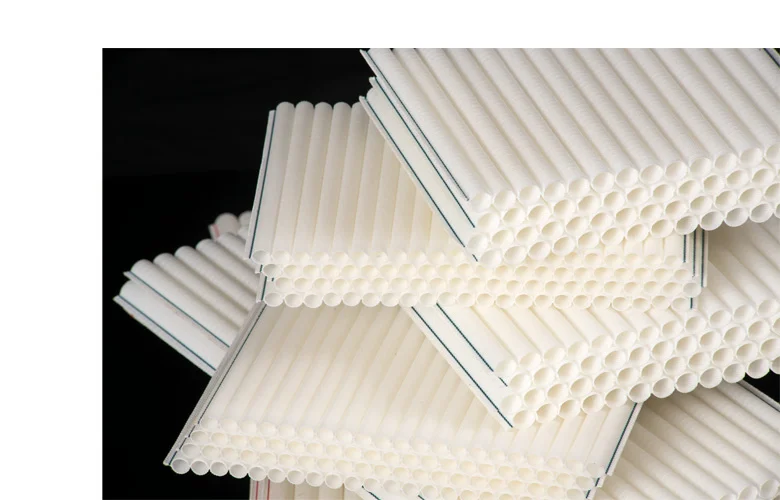
FIG. 1 — PLURI-TUBULAR GAUNTLET BAGS, WOVEN IN-HOUSE
The pluri-tubular gauntlet — Patent № 587320
The gauntlet is the quiet hero of the tubular plate, and most battery makers buy theirs from a catalogue. Microtex weaves its own — and has for decades, supplying PT bags and separators to other battery manufacturers as products in their own right. In April 2026, that accumulated gauntlet engineering was granted Indian Patent № 587320 for the pluri-tubular gauntlet: the multi-tube construction woven as one continuous fabric.
Where quality is actually won
A tubular cell is only as good as its weakest bought-out part. Microtex makes its own lead alloys, its own oxide, casts its own spines, weaves its own gauntlets and PT bags, and makes its own separators; the containers and covers are moulded by our group company Kruger Industries. When one house controls the chain, a defect has nowhere to hide — and a claim on the nameplate can be traced to a process we own.
Alloy → Oxide → Spine → Gauntlet → Fill → Form → Test
/ THE METHOD
How a Microtex tubular plate is made
01 / ALLOY
Cast in-house
We prepare our own lead alloys, so spine metallurgy is a controlled input — not a supplier’s promise.
02 / SPINE
The conducting skeleton
Spines are cast as one grid — the current path every tube depends on for its whole service life.
03 / OXIDE
Our own active material
The lead oxide that becomes active material is made on site, batch-controlled for deep-cycle duty.
04 / GAUNTLET
Woven, patented
Pluri-tubular gauntlets woven in-house — the construction protected by Patent № 587320.
05 / FILL & FORM
Charged into life
Tubes are filled, plates cured and electrochemically formed under controlled schedules.
06 / TEST
Proved, not promised
Ranges are type-tested at CPRI, India’s central power research institute — report numbers travel with our tenders.
One technology, four duties
OPzS stationary cells
Flooded tubular cells for substations, utilities and critical infrastructure. CPRI type-tested; seismic qualification detailed on the OPzS page.
OPzV Gel
Tubular gel, maintenance-free — 2V 1200Ah OPzV and 1000Ah T-Gel cells type-tested at CPRI (2025).
Traction & forklift
Deep-cycle motive power — 2V traction cells (300 / 602 / 930 Ah) capacity-tested at CPRI in 2025.
Mining batteries
Tubular packs engineered for underground duty — MUV, scoop and locomotive fleets.
Evidence, not adjectives
| Product | Test | Where & when |
|---|---|---|
| 2V traction cells — 300 / 602 / 930 Ah | Capacity (C5), marking, dimensions | CPRI Bengaluru · Jul 2025 |
| 2V 1200 Ah OPzV · 2V 1000 Ah T-Gel | Rated capacity, Ah/Wh efficiency | CPRI Bengaluru · Jan 2025 |
| 12V 150 / 200 Ah tubular monoblocs | IS 13369 : 1992 (RA 2017) | CPRI Bengaluru · Dec 2023 |
Report numbers and ULR references are quoted in our tender documentation and available on request. In the field, mining locomotive cells built on this technology have given 10–15 years of underground service in Indian and African mines.
Questions engineers ask us
How much longer does a tubular plate last than a flat plate?
In deep-cycle duty, tubular positives typically outlast flat plates by a wide margin, because the failure mode that kills flat plates — shedding of active material — is physically contained by the gauntlet. The exact ratio depends on depth of discharge, temperature and charging discipline; ask us with your duty cycle and we will answer with numbers.
What is a gauntlet, and what is a PT bag?
The gauntlet is the woven tube that holds positive active material around its spine. A PT (pluri-tubular) bag is a full row of gauntlets woven as one fabric. Microtex weaves both in-house and supplies them to other battery manufacturers as well.
Where do tubular batteries actually fail first?
Usually not in the tubes. End of life in a well-made tubular cell is governed by slow corrosion of the positive spine and, in neglected batteries, by abuse: chronic undercharging, heat, and watering neglect. That is why we publish charging and maintenance guidance with every battery — the technology earns its life only when charged properly.
Which tubular type suits my application — flooded, gel or traction?
Broadly: flooded OPzS where trained maintenance exists and life is paramount (substations, plants); OPzV gel where maintenance visits are rare or the room is unmanned (solar, telecom, remote sites); traction construction where the battery is cycled hard daily (forklifts, mining vehicles). The right answer depends on duty — describe yours and an engineer will respond the same working day.
Do you make the tubular components yourselves?
Yes — alloys, oxide, spines, gauntlets and PT bags, and separators are made in-house in Bengaluru; containers and covers are moulded by our group company Kruger Industries. The pluri-tubular gauntlet construction is protected by Indian Patent № 587320 (2026).
Put six decades of tubular engineering behind your next tender.
Tell our engineers the duty — application, voltage, capacity, country, timeline — and the proposal comes back sharp.