
/ ENGINEERING · SOLUTIONS, NOT CATALOGUES
Our job is not to sell you a battery. It is to solve your problem.
Catalogue companies sell what is on the shelf. Microtex engineers what the duty demands — electrolyte density chosen for your site’s real temperature, packs built to your machine’s box, chargers matched to the battery they feed, documentation built for your auditors. This page shows how that engineering works and who stands behind it.
Duty-engineered, not catalogue-picked — In-house chain: alloy → cell → charger — Test lab on site — Same-working-day engineering replies
How an enquiry becomes an engineered answer
First, the interrogation. Before anything is quoted, our engineers ask about the duty: loads and durations, temperatures, the room or the machine, the charging arrangements, who maintains it and how often. If an answer makes the application unsafe or the battery unsuitable, we say so — a battery seller who never says no is a battery seller you should not trust.
Then, the engineering. Cell type and size chosen against the duty at the honest rate; electrolyte density set for the site’s operating temperature, not the laboratory’s; mechanical design — trays, restraint, containment — built for the environment; the charge profile specified alongside the battery, because most batteries are killed in the charging room, not at work.
Then, the proof. Type-tested ranges at CPRI with report numbers quoted; factory acceptance testing your inspectors can witness; documentation packs built for tender rules; and after delivery, commissioning support and a warranty philosophy with one instruction behind it — we do not want to see a single battery come back.
The engineering behind the promises
The patented gauntlet
Indian Patent № 587320 — the pluri-tubular gauntlet, and a manufacturing chain owned end to end: alloys, oxide, spines, gauntlets, separators.
The laboratory & the floor
Independent chemical and electrical test laboratories — separate from production and design — running Bitrode and Digatron life-cycle test systems since 2008, down to spark-emission analysis on incoming materials. On the floor: Wirtz casting machines (six 42C, two 332C) and Supramac and Optamac pasting lines — industry-standard machinery, set to our standards. The first discharge tells the truth the nameplate only promises.
The engineer behind the engineering
Battery design and manufacturing at Microtex is led by Dr. Michael McDonagh — PhD in metallurgy and materials science, five decades in lead-acid batteries across European plants, submarine programmes and three battery factories of his own building, technical editor at BEST Magazine, and Microtex’s Chief Technical Officer since 2011. He visits Bengaluru every two months, and his standards are the reason our answers begin with questions.
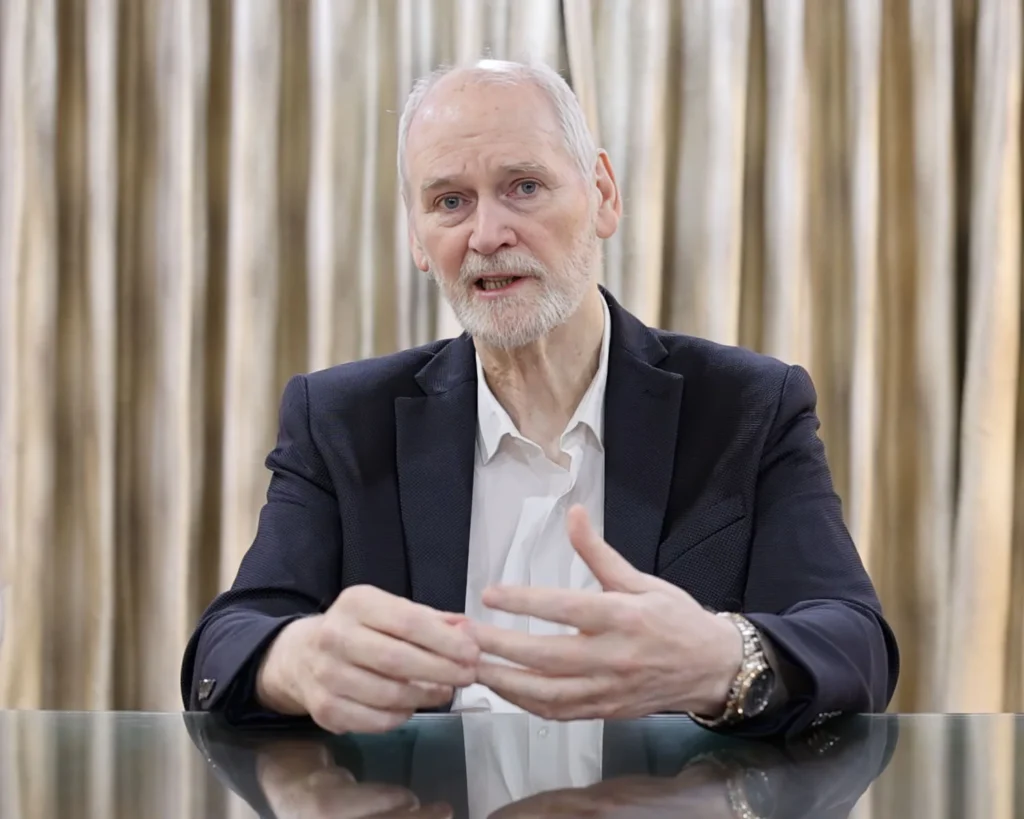
FIG. 1 — DR. MICHAEL McDONAGH · CTO · 50 YEARS IN LEAD-ACID
Questions engineering buyers ask us
What information should I send with a technical enquiry?
The duty, as honestly as you know it: application, voltage and capacity if known, loads and durations, site temperature, country, timeline — and for replacements, the old nameplate photo and box dimensions. The more duty detail, the sharper and faster the proposal; enquiries are acknowledged the same working day.
Will you tell me if my specification is wrong?
Yes — respectfully, in writing, with the reasoning. Oversized banks waste your capital; undersized ones spend your reputation. Correcting a specification before the order is engineering; correcting it after is a warranty claim.
Can you work to our qualification and audit requirements?
That is our home ground: approved-vendor registrations with demanding institutions, type-test documentation with report numbers, witnessed factory acceptance tests, and manufacturing records your auditors can walk through in Bengaluru — the plant is open to serious customers.
Do you design batteries for applications you haven’t served before?
Carefully, yes — that is how our mining vehicle packs began: engineers underground studying the duty before a single cell was specified. New duties get the same treatment: interrogation first, engineering second, proof third. What we will not do is relabel a catalogue product and hope.
What an auditor would find — on film
Two in-house laboratories that report to nobody in production. “They report the facts. It’s up to us to ensure we pass.”
Bring us the problem you were told to live with.
Describe the duty; an engineer replies the same working day. If we are not the right answer, we will say that too.