
/ MOTIVE POWER · GOLF & UTILITY VEHICLES · EX-STOCK
Golf-cart batteries — 6 V, 8 V and 12 V ex-stock in Bengaluru
Carts down? Our 6 V, 8 V and 12 V deep-cycle golf-cart batteries are on the shelf in Bengaluru — 20 to 30 of each voltage, larger fleets made to order — built on tubular plates, with one type at each voltage type-tested at CPRI (2024). Tell us the cart voltage, the batteries per cart and the number of carts; we reply within the working day, and the offer states the despatch date. Call or WhatsApp +91 9686 4488 99.
6 V · 8 V · 12 V ex-stock — 20–30 of each voltage — CPRI type-tested (2024), one type per voltage — Tubular plates inside — Founded 1969 · exporting since 1977
In stock now — the types
Seven types, each in two terminal styles. Twenty to thirty blocks of each voltage are normally on the shelf in Bengaluru; the type stocked at each voltage is confirmed in the offer; larger quantities are made to order. Despatch time is stated in the offer. Capacities are at the 20-hour and 5-hour rates as our catalogue states them; dimensions are length × width × height in millimetres; weights are with electrolyte.
| Type | Voltage | Ah at C20 | Ah at C5 | L × W × H (mm) | Weight, filled (kg) |
|---|---|---|---|---|---|
| EV-T6V205 | 6 V | 205 | 165 | 262 × 181 × 283 | 29 |
| EV-T6V220 | 6 V | 220 | 180 | 262 × 181 × 283 | 31 |
| EV-T6V240 | 6 V | 240 | 196 | 262 × 181 × 283 | 33 |
| EV-T8V140 | 8 V | 140 | 115 | 262 × 181 × 283 | 28 |
| EV-T8V155 | 8 V | 155 | 128 | 262 × 181 × 283 | 31 |
| EV-T8V175 | 8 V | 175 | 140 | 262 × 181 × 283 | 33 |
| EV-T12V150 | 12 V | 150 | 120 | 330 × 181 × 295 | 39.4 |
Every type is made with L-terminals or with profile-and-short terminals — say which your cart uses, or photograph the top of an old block. The 10-hour and 100-hour ratings, the energy per block and the pallet packing (36 blocks) are on the datasheet, supplied on request.
Which blocks does my cart take?
A 36 V cart runs six 6 V blocks or three 12 V blocks. A 48 V cart runs eight 6 V blocks, six 8 V blocks or four 12 V blocks — the battery bay and the cart maker’s wiring decide which, and fewer, larger blocks mean fewer connections to keep clean. Not sure? Photograph the bay and the nameplate of one block and send both by WhatsApp; we read them and quote the match with weights and terminals.
Who runs these batteries
Golf courses and resorts
Two rounds a day on a cart the guest never thinks about; the battery is deeply discharged every day of the season and must be ready again by morning.
Hotel fleets
Guest shuttles and housekeeping carts that run from dawn to the last check-in, often in humid coastal air that is hard on terminals — our terminals are coated against corrosion.
Campus shuttles
Carts moving people and parcels between the buildings of a campus all day — long hours, many stops, one overnight charge.
Utility vehicles
Electric buggies and light utility carts carrying tools, linen or luggage. Where the duty is heavier than a cart, the 6 V tubular blocks below or our forklift batteries take over.
Why a golf cart needs traction plates, not a car battery
A car battery is built for one hard second — the starter motor — and is topped up by the alternator before it has lost more than a few per cent. A golf cart does the opposite: it draws steadily for hours and takes its battery well down twice a day, every day of the season. That duty strips active material off an automotive plate within months. A deep-cycle block built on tubular positive plates keeps its active material inside woven gauntlets wrapped around cast spines, so the plate holds what it is made of through thousands of deep cycles. How the plate is made is on our technology page.
The other half of fleet economics is routine: a full charge after the day’s use, water after the charge, and a proper lay-up for the off-season. A one-page routine comes with every supply — it costs nothing and adds seasons.
The alloys, the oxide, the spines, the plates, the gauntlets, the separators and the containers are all made by the Microtex group in Bengaluru, and every block is heat-sealed. When a question comes in about any part of the battery, the answer comes from the people who made it.
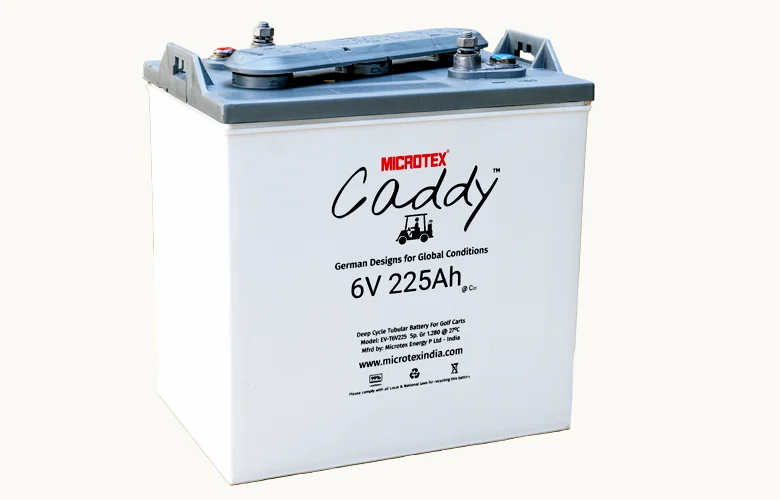
FIG. 1 — DEEP-CYCLE GOLF CART MONOBLOCS, 6 V · 8 V · 12 V
Heavier duty: 6 V tubular blocks for utility vehicles
For the heaviest utility duties, our 6 V motive-power blocks put three 2 V tubular cells in polypropylene containers inside an FRP tray, with bolted terminals and flip-top vent plugs with an indicator. These are made to order; the lead time is stated in the offer.
| Model | Voltage | Ah at C20 | Ah at C5 | L × W × H (mm) | Weight (kg) |
|---|---|---|---|---|---|
| Mi6390P | 6 V | 390 | 320 | 313 × 174 × 388 / 417 | 60 |
| Mi6362P | 6 V | 362 | 297 | 313 × 174 × 388 / 417 | 55 |
| Mi6315P | 6 V | 315 | 258 | 313 × 174 × 388 / 417 | 50 |
Evidence, not adjectives
| Model | Rating | Test |
|---|---|---|
| EV-T6V 225 | 6V 225 Ah | Type-tested at CPRI Bengaluru against customer requirement · Feb 2024 |
| EV-T8V 175 | 8V 175 Ah | Type-tested at CPRI Bengaluru against customer requirement · Feb 2024 |
| EV-T12V 150 | 12V 150 Ah | Type-tested at CPRI Bengaluru against customer requirement · Feb 2024 |
| Manufacturing | Alloys, oxide, spines, plates, gauntlets, separators and containers made by the Microtex group in Bengaluru — the technology page shows how | |
| End of life | Registered with the Central Pollution Control Board as a producer under the Battery Waste Management Rules, 2022 — see environment and recycling | |
| Heritage | Microtex Energy, Bengaluru: founded 1969, exporting since 1977 | |
Report numbers and ULR references travel with our documentation — ask and they are quoted.
From our distributor’s letter — United Arab Emirates
Swaidan Trading Co. LLC, part of the Al Naboodah group, has been the sole distributor of Microtex golf-cart batteries in the United Arab Emirates for seven years from 2019, with sales and service across the Emirates. Its letter on file reports satisfaction with the product quality and the after-sales support. Published with Swaidan Trading’s permission.
Facts as written in the distributor’s letter on our file. Further references on request — ask with your enquiry, or write to info@microtex.com.
Charging — typical settings, confirm with Microtex
The charger decides how many seasons a fleet gets. The settings below are the typical values from our golf-cart catalogue, at 27 °C, for the blocks in the table above; confirm them with us for the type you buy and the charger you run before anything is set, and follow the datasheet, which we supply on request. Series voltages for 36 V and 48 V carts follow by multiplication and are on the same datasheet.
| Charger setting at 27 °C | 6 V block | 8 V block | 12 V block |
|---|---|---|---|
| Float | 6.75 V | 9.00 V | 13.50 V |
| Boost (recharge) | 7.35 V | 9.88 V | 14.70 V |
- Temperature: raise the setting by 0.005 V per cell for every degree below 27 °C and lower it by the same for every degree above. The blocks work from −20 °C to 55 °C; below 0 °C keep them above 60 per cent charged.
- Charger: use one that switches itself off at full charge. If yours does not, set a timer and check the charge as it progresses. Charge fully after the day’s use; never leave a cart flat overnight.
- Storage: a stored block loses 2–10 per cent of its charge a month depending on the temperature, so a fleet laid up for the off-season is charged fully first and refreshed during the lay-up.
Flat, or finished? A two-minute check before you order
Let the block rest for a few hours off the charger and off the cart, then read its voltage at the terminals. Our catalogue gives these rested readings against specific gravity:
| State of charge | Specific gravity | 6 V block | 8 V block | 12 V block |
|---|---|---|---|---|
| 100 per cent | 1.280 | 6.36 V | 8.48 V | 12.72 V |
| 50 per cent | 1.170 | 6.06 V | 8.08 V | 12.12 V |
| 20 per cent | 1.100 | 5.84 V | 7.78 V | 11.68 V |
A block that has had a full charge and still rests near the bottom of the table, or one block in a string that reads well below its neighbours, is the usual sign of a worn-out block — photograph its nameplate and call. A whole string that reads low but evenly points first at the charger. More on reading a battery’s state: state of charge and specific gravity.
Care that keeps a fleet on the course
- Water once a month, after the charge, with demineralised water only, never above the mark. The flip-top lids are simple to open, so the check takes a minute a block — see battery water.
- Terminals: ours are coated against corrosion, but a loose connection or salty air will still grow a crust. Keep them tight, clean them when needed and finish with a thin film of petroleum jelly — resorts near the sea most of all.
- Switch off: lights and accessories left on will drain a parked cart; the master switch goes off before storage. A short printed instruction for drivers saves batteries.
- Hills: the harder the cart works, the sooner it is flat. Where the course is steep, route the carts round the worst climbs.
- A laminated card on the cart, where the driver and the maintenance team can read it, is a life extension that costs almost nothing. The walk-round guide gives the full routine.
What we need for a quotation
Send whatever you have of the list below — a nameplate photograph on WhatsApp is enough to start. We reply within the working day; the offer states the despatch date.
- Cart voltage (36 V or 48 V) and the number of blocks per cart, or the cart make and model.
- Block type — the voltage and Ah on the old block’s nameplate, or a photograph of it, and the terminal style.
- Quantity — number of carts, or number of blocks.
- Where and when — city or country, and the date the carts must be back in service.
- Charger — make and type if you have it, so the settings can be checked with the offer.
Further reading: how to charge a lead-acid battery correctly, cycle life against depth of discharge, how the tubular plate is made, and the rest of our motive-power range.
Questions fleet managers ask us
Are golf-cart batteries in stock, and how fast can I have them?
Yes. 6 V, 8 V and 12 V deep-cycle blocks are ex-stock in Bengaluru, normally 20 to 30 of each voltage; larger quantities are made to order. We reply within the working day; the offer states the despatch date. For the fastest answer call or WhatsApp +91 9686 4488 99 with the cart voltage, the blocks per cart and the number of carts.
6 V, 8 V or 12 V blocks — which should my carts use?
The cart’s system voltage and its battery bay decide it: a 36 V cart runs six 6 V blocks or three 12 V, a 48 V cart eight 6 V, six 8 V or four 12 V. Fewer, larger blocks mean fewer connections to keep clean. Send the cart model and the bay dimensions, or a photograph of the bay, and we quote the right combination with weights and terminals.
Can you match my existing fleet’s batteries?
Photograph one block’s nameplate and the bay, note the cart model, and send both by WhatsApp or through the enquiry form. We reply within the working day with dimensions, weight, terminal style and price.
What charger settings should I use?
Typical values from our catalogue at 27 °C are a float of 6.75 V, 9.00 V or 13.50 V and a boost of 7.35 V, 9.88 V or 14.70 V for a 6 V, 8 V or 12 V block, corrected by 0.005 V per cell for every degree away from 27 °C. They are typical, not a rule: confirm them with us for the type you buy and the charger you run, and follow the datasheet, which we supply on request.
How long do golf-cart batteries last?
Fleet life is written in the charging shed: how deep the blocks go each day, full recharges against habitual partial ones, watering, and heat. Tubular deep-cycle blocks reward that discipline with seasons of service. Tell us the rounds per day and the charger type and we state the expectation for your fleet honestly.
How should a seasonal fleet be stored?
Charged fully before storage, master switch off, kept cool, and refreshed with a charge during a long lay-up — a stored block loses 2 to 10 per cent of its charge a month depending on the temperature, and suffers if left flat for months. A one-page storage routine comes with our supply; follow it and the start of the season is uneventful.
What warranty comes with the batteries?
Standard warranty is 12 months from the date of invoice; terms for a fleet or project supply are as stated in the offer. The offer also carries the one-page care routine; the datasheet and charger settings are supplied on request.
Do you supply outside India?
Yes. Microtex has exported since 1977. Give the country with the enquiry; the offer states the packing (36 blocks to a pallet) and the shipping route.
Quiet carts, full season, no surprises.
Send the cart voltage, the blocks per cart and the number of carts — we reply within the working day; the offer states the despatch date. 6 V, 8 V and 12 V blocks ex-stock in Bengaluru. Four ways to reach us: